Friday, November 18, 2011

Joseph's Picks Of The Week 11/18/11 - Thee Oh Sees and The Grateful Dead


While these days it’s relatively easy to hear or read them described in basically garage-band terms, it is very much worth noting that San Francisco’s Thee Oh Sees began operation as a far weirder amalgamation of influences. Formed by John Dwyer, ex of such impressive noise-rock outfits as Coachwhips and Pink and Brown, Thee Oh Sees explored avenues of less raucous but intensely attractive outsider headspace. Their first LP THE COOL DEATH OF ISLAND RAIDERS for instance, drew upon such disparate if simpatico angles and influences as The Shaggs, loner-psyche, freak-folk, post-Krautrock drones and even hints of The Paisley Underground at its least collegian. A big part of the band’s appeal comes via vocalist/keyboardist Brigid Dawson, her voice at times conjuring up the bruised eeriness that makes underground UK psyche-folk such a continually appealing proposition. But as tilting an ear toward the very necessary corral of short-players SINGLES VOL. 1 + 2 or the outstanding full-length CASTLEMANIA from earlier this year shows, Thee Oh Sees also have a predilection for rock. And even though I haven’t managed to absorb every bit of their sizable discography I feel confident in proclaiming that the freshly released CARRION CRAWLER /THE DREAM LP finds them at the very top of their game. It shows an expert hand at combining the aesthetic and sense of scale that continues to define the garage genre with welcome gusts of legit psyche action all without the slightest bit of dissonance in presentation, which is really worth noting since the stripped down grunt of basic garage-rocking often suffers when mixed with more outbound tendencies. The appeal of “I Had Too Much To Dream Last Night” or “Incense and Peppermints” stems from gestures less sincere and far more trend-conscious, but the tone turning serious frankly resulted in scads of mere curiosities and outright missteps, and anyway it’s 2011 and Thee Oh Sees are markedly not in a post-NUGGETS mold; frankly they’re just too intrinsically weird for that designation. John Dwyer is a byproduct of the fertile ‘90s underground, a scene where it wasn’t a bit unusual to find folks drawing influence from such varied sources as garage odd-meats Thirteenth Floor Elevators, Krautrock kingpins Can, UK free-folksters Comus, and avant-drone monster Charlemagne Palestine. And CARRION CRAWLER wastes no time in showing off Dwyer and Co’s far-reaching scope, though the sprawl is generally rock taggable; the opener “Carrion Crawler” hits upon an exquisite run of extended riff-worship that’s like PIPER-era Floyd if they recorded for International Artists, but with just a hint of outbound distorto soloing that recalls Wayne Rogers of much missed ‘80s New England psychsters Crystallized Movements.  “Contraption/Soul Desert” utilizes finely tuned passages of stun guitar to come up with something that’s not far from early Airplane if they’d been routinely shoot-up in the left butt-check with primo ‘roids by some rogue manager. But it’s the instrumental “Chem-Farmer” that provides CARRION CRAWLER with its standout track, locking into a brawny, vaguely Kraut-like rhythmic groove and then just riding it until they actually start inspiring visions of a mythical garage-punk version of early Stereolab. If Thee Oh Sees don’t manage to attain the heights of “Chem-Farmer” on the second side, they don’t miss by much, and I’m quite pleased with the development of their motion. “The Dream”’s sound actually registers as completely contemporary and very hard for me to draw comparisons with any other band currently working, though I’m sure I could come up with something if I sat here and contemplated it for a while. Maybe the label switch to In The Red has something to do with it (or maybe I’m just imagining things) but The Oh Sees are fine-tuning their sound, becoming heavier, more muscular while reining back the weirdness and not sacrificing a thing in depth or quality. CARRION CRAWLER/THE DREAM’s second side presents a well focused band upping the forcefulness of their attack to fine result, and I’m quite psyched to hear Thee Oh Sees’ future developments. No pun intended.


I’m on record as considering the first three albums by The Grateful Dead to be something like the apex of San Francisco psyche as rendered in the studio environment, and prizing LIVE/DEAD as one of the greatest of all live rock albums. That trio of studio-bound Dead discs essentially present a blues-based band not particularly far from the standard Stones/Yardbirds template (the debut THE GRATEFUL DEAD) subsequently undertaking considerable levels of experimentation (ANTHEM OF THE SUN) and then combining that spirit of exploration with maturing songwriting skill and instrumental prowess (AOXOMOXOA). And as great as those three records continue to be, LIVE/DEAD, when considered along with the concert captured on Quicksilver Messenger Service’s HAPPY TRAILS and the half live/all awesome stature of Big Brother and the Holding Company’s CHEAP THRILLS basically sums up San Fran psyche as a true 'performance based' music. Indeed, the constant touring of the Dead and the ritualistic grandeur of their shows springs from just this very idea. Even though I think their first three records get a bad rap from certain quarters, I can’t deny that when it comes to the Dead, live is where it’s at. And after catching lightning in a bottle and waxing it on four sides of vinyl, just where does this particular band go from there? Back into the studio where they recorded WORKINGMAN’S DEAD, frankly a record it took me years to warm up to. Full disclosure: as a mid-‘80s Johnny-come-lately suburban punk I found The Grateful Dead to be something distinctly other than my bag, dig me? Of course I grew up and out of that shortsightedness, and LIVE/DEAD was the major part of my maturation. Sure, I also grabbed a handle on that early studio stuff, mainly because I’d grown curious over the storied nature of the San Fran scene in general, looking into names big (Quicksilver, Santana, Sly, Steve Miller, Airplane, Country Joe, Big Brother, Moby Grape, It’s a Beautiful Day) and small (Mad River, Frumious Bandersnatch, Mojo Men, The Mystery Trend, Kak, Fifty Foot Hose). But LIVE/DEAD hit me like a ton of Tex Avery’s cartoon bricks, and back then in my estimation the unabashed studio-based acoustic country-folkishness of WORKINGMAN’S DEAD just didn’t compare. Well, it still doesn’t, but I’ve come to consider LIVE/DEAD and WORKINGMAN’S to be something like apples and oranges harvested from the same funky orchard. The first of two Dead albums released in 1970, WORKINGMAN’S opens and closes with two by now ubiquitous tunes from the band, the somewhat Crosby Stills and Nash-like “Uncle John’s Band” and the country-rock cornerstone “Casey Jones”. I’ve heard these classic rock radio staples more times than I can shake a rucksack made from 100% hemp at, but what’s interesting is how they can transcend being overplayed and still work in the context of the LP that spawned them. In addition, WORKINGMAN’S also includes a few deep cuts/concert staples in “High Time”, the distinctively bluesy “New Speedway Boogie”, the rollicking “Cumberland Blues” and the fabulous “Black Peter”. What I’ve come to accept over the years is just how strongly conceived and well delivered these songs are. What I’ve come to acknowledge over the years is just how prescient their sound was; this album and AMERICAN BEAUTY are basically Americana in a nutshell (check out “Dire Wolf” if you don’t believe me). And what I’ve come to understand over the years is that some stereotypes are really nothing more than collective faulty opinions. That is, for a band often derided for excessiveness and self-indulgence, WORKINGMAN’S DEAD is lean in construction and direct in execution. As the record’s most psychedelic track, “Easy Wind” is notable in this context, heading outward but retaining the relative brevity of the album’s other seven songs. By this late date The Grateful Dead are not only deeply ensconced as major players in non-crap rock lore but also continue to be relevant in a contemporary sense, influencing scads of bands including Wilco, The Decemberists and Animal Collective. They were also the true survivors of the San Fran scene, releasing quality albums deep into the ‘70s when their contemporaries had succumbed to shilling out sub-par product or far worse. WORKINGMAN’S DEAD might pale in comparison to one of the band's top-notch live shows or even next to the intense studio weirdness of ANTHEM OF THE SUN, but it’s still a jewel in its own right. If you don’t know it, please proceed. And if you’re undecided? Well, it can never hurt to reconsider.

Thursday, November 17, 2011

In the bin today!

Best Coast-Make You Mine 2x7"


Ding-Dongs-4 Song Ep


the King Kahn & BBQ Show-We Are The Ocean 7"


Radar Eyes-Miracle 7"


Ty Segall-Spders 7"


Mark Sultan-Livin My Life 7"


Mark Sultan-Whenever I want


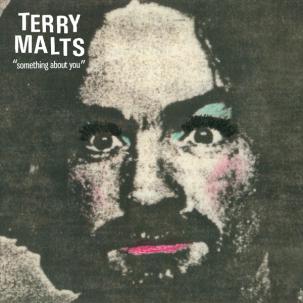
Terry Malts-Something About You 7"


Friday, November 11, 2011

Joseph's Picks Of The Week 11/11/11 - El Rego and Spectrals


Some bemoan the internet and file-sharing in particular as harmful to not only the Recording Industry, but also to struggling musicians and the smaller brick and mortar music stores that stock their wares. I understand and don’t necessarily disagree with that line of thinking, but can’t help seeing it somewhat differently. Take for example the steady stream of choice (re)discoveries from Africa. Back in the day, non-empowered global consumers interested in exploring the sounds of that most excellent continent’s more commercially oriented movements so often had to be satisfied with whatever the big record companies deigned to release. Sure, smaller labels like the late John Storm Roberts’ absolutely crucial Original Music were dedicated to tirelessly documenting numerous pockets of the African scene, but if a shopper didn’t have foreknowledge of these happenings then she had to rely upon either stumbling luckily over them in the racks, a dubious likelihood at best, or getting hipped to them through the pages of a music press that even twenty-five years ago was far more interested in chasing after the Next Big Homegrown Disappointment than in spotlighting a master like Francis Bebey. Meanwhile, musicians were struggling as always seems to be their lot. In the new millennium however, a Fela fan with ‘net access can get online and in a matter of hours experience the “dry guitars” of ‘50s-‘60s Kenya, soak up the majestic Ghanaian highlife of Alhaji K. Frimpong, cherry pick a couple volumes from the still astounding ETHIOPIQUES series, discover the massively popular Malian Afro-Latin innovators The Rail Band, and then mellow out with the classic PIRATES CHOICE by Senegal’s Orchestra Baobab. And instead of the non-capitalistic sharing of this material killing off the market for actual commercially released product like so many doomsayers had predicted there seems to be more than ever an intriguing flow of geographical or stylistically themed compilations and lovingly annotated single-artist retrospectives in the racks for deep consideration. A few years back it was Ethio-jazz master Mulatu Astatke who blew up large in part due to his work’s inclusion on the soundtrack to Jim Jarmusch’s excellent film BROKEN FLOWERS. Who knows who is next, but it just might be Theophile Do Rego, better known as simply El Rego aka Benin’s Godfather of Funk. Daptone Records has compiled a smoking batch of this key figure’s stuff, originally waxed on 45s, some of which were first collected (credit where it’s due) on CD by the amazing label Analog Africa, home of such delights as AFRICAN SCREAM CONTEST and AFRO-BEAT AIRWAYS. El Rego’s style will seem instantly familiar to anyone with even a rudimentary knowledge of U.S. funk. Unsurprisingly, James Brown is the music’s biggest influence, but “Feeling You Got”, the opening cut on this self-titled 12-track LP also explores more basic and less dense dance-craze territory like Archie Bell & the Drells’ masterpiece of synchronized motion “Tighten Up”, a motif El Rego will continue to exploit on the songs “Djobime”, “Hessa” and “Cholera”. Perhaps “Feeling You Got”’s most interesting attribute, in addition to its infectious groove-mining and exhortations to “sock it to me!”, is the seemingly left-field use of accordion, frankly not an instrument often associated (outside of zydeco) with sweaty rhythmic throwdowns. The employment of squeeze box does point to Benin’s history of French colonization, however, and this is a huge part of the record’s surplus value, showing that the growth of 20th Century African popular music was as complex and convoluted, i.e. non-purist as anywhere else on the globe. But while much more than a local sensation, El Rego was predominantly geared toward the make-it-or-break-it logistics of the bandstand; this is live music, recorded cheaply but warmly with no overdubs as an uncut display of what a listener would experience if they dropped a few ragged coins and stepped out onto the dance floor. In this regard El Rego and the Commandos aren’t so much interested in showing off just how stylistically varied they could be; instead the songs are far more inclined to examine and adjust structures already proven to be successful. This shouldn’t imply that the music here is monochromatic. To the contrary, “E Nan Mian Nuku” is a slow-boil mid-tempo monster featuring call-and-response vocals and a massive sax solo, and “Vive Le Renouveau” is a bluesy lament that can’t help but betray El Rego’s ambivalence toward the Benin revolution, a movement that for practical purposes here can be summed up as “all work and no play”, not the happiest of environments for a man who made his living as a nightclub performer. Yes, there are enough grunts, shouts and hollers on EL REGO to please any James Brown hardliner, and in fact one of the coolest moments on the whole disc is the atypically down-tempo moodiness of “Ke Amon-Gbetchea”, which begins with a sly tip of the oh-so-suave hat to Brown’s magnificent early classic “I Don’t Mind”. But there’s also a very fine guitar solo on “Kpon Fi La”, fantastic keyboard and sax on “Achuta”, the frenetic playing of “Cholera” and the basically flawless party igniter of “Do Do Baya”. If EL REGO has a tangible shortcoming, it might just be that all of these songs were recorded for 45s, a fact that’s certainly no crime but does indeed leave a wee bit to be desired when the party’s cranked up and cooking, the Commandoes having elevated smack-dab into that gorgeous groove-zone that dependably raises the intensity on the way to crafting one of those eternally memorable nights, and then…fade out. Well, it’s not a big deal, since like all truly great music El Rego’s sound is multi-purpose. Yes Virginia, it’s enjoyable while driving, walking, sitting and even lying down. Score another major achievement for funky Africa and to those distinguished kings and queens at Daptone for increasing the profile of this most deserved artist.


Upon first cuing up BAD PENNY, the full length debut from Spectrals, I was immediately beset with thoughts of Scotland’s Orange Juice, a band that I like (quite a bit actually) but will confess to not listening to in a couple years at least. Orange Juice played a crisp, chiming, unthreatening brand of cleanly delivered guitar-pop that pleased a whole lot of listeners fatigued by the lingering unruliness of punk. Naturally, this inspired a whole lot of punks to disdain them immensely. But this is all water long under the bridge. For listeners unfamiliar with Orange Juice I can throw out some other names in regard to Spectrals: The Smiths, hints of New Zealand’s The Chills, and the still extant UK-based Merge recording artists The Clientele. What these names all share is an abiding love if not necessarily reverence for the 1960s, and all (but one) can claim Great Britain as home. This puts a fine point on how the UK excels at just this sort of guitar-based melancholia-tinged riding my bike on a rainy day song-construction, and Spectrals peddles it with the youthful confidence of being defiantly out-of-vogue. BAD PENNY posits an alternate universe that shapes up like a weird facsimile of 1985, possessing the kind of grey-skied chilly landscape that decreed a highly intelligent, overly sensitive young genius who just couldn’t help but express his alienation, self-deprecation and preternatural maturity through the medium of songwriting simply must indulge his talent by spending hours (days, months even) crafting his opuses in a cluttered but almost maddeningly picturesque bedroom, photos tacked in scattershot fashion to the walls and taped to the smudged bureau mirror (snapshots all in black and white, natch), a threadbare rug partially covering a dusty, creaky hardwood floor, and towering stacks of books of poetry and neglected literary masterpieces (need I say all old and worn?), so naturally when it came time to actually record these tunes of exasperating brilliance for some small but deservingly hip label our headstrong auteur insists upon playing nearly all of the music himself, reasoning that it springs from his mind and he above everyone knows just how it all should sound. Perhaps this is arrogance in action, but if so it’s also par for the course. Yes, here in the real world Spectrals is the project of one 21 year old, namely Louis Jones, with assistance on drums and with production. This makes him just a smidge younger than Edwyn Collins at the point of YOU CAN’T HIDE YOUR LOVE FOREVER. But Orange Juice, while in retrospect obviously Collins’ band, were still until the very end an actual band; Spectrals is the show of one young man, and this makes BAD PENNY’s level of quality and assurance doubly impressive, though it denotes two different shades of musical authorship., e.g. Edwyn Collins is an old(er) school Nicholas Ray-type auteur while Louis Jones is a newer model, more like Robert Altman or better yet Peter Bogdanovich. Now that I’ve effectively lost most of the people reading this, let me get down to some more tangibly musical observations re: BAD PENNY. Jones as maestro squarely hits upon that very UK mode of mingling string-driven whimsy and jangle with an experienced crooner’s sense of weathered pomp. One thing about this particular strain of Brit-post-punk is its inherent theatricality; while Jones leans more toward Collins in delivery than the well-practiced melodrama of Morrissey, he is still very much in a Tin Pan Alley mode. This said, BAD PENNY’s first and biggest immediate flaw is an occasional sameiness in the songwriting, a fact that may matter more for some folks than it does me. Maybe I’m just in a slack-giving mood, but no; I tend to like it when a debut record leaves promise for the future instead of being so worked-out, fussed over and well-honed that it quickly instills a growing dread for the disappointment of the sophomore effort. To be blunt, BAD PENNY isn’t as good as the first long-player by Girls, but what Louis Jones does provide is a sense of promise for the future. And while I didn’t find Girls’ latest to be disappointing, I couldn’t help but notice that on FATHER SON HOLY GHOST Christopher Owens was already taking unexpected detours into the realms of latter-day Pink Floyd. Something tells me Spectrals isn’t going to go that route. To be clear, BAD PENNY is actually way above average, within hailing distance of great in fact, and anybody with a fondness for some or all of the above reference points should give this one a shot. As the eleven songs unwind, Jones displays an uncommon level of appreciation for classic pop songcraft, something he shares with Magnetic Fields, though Stephen Merritt’s love of Cole Porter/show tunes is basically absent from Spectrals’ sound. Instead, Jones is more like the kid transfixed by the Dionne Warwick records spinning on Mum’s hi-fi. Hmmm. Come to think of it, if there is indeed an American connection to Spectrals, it’s probably Burt Bacharach. Geez. Just when it seems like that dude might finally be old hat, along comes someone else to validate his relevance. Little animated birds have informed me that Spectrals’ early stuff is a little more reverbed-out and Spector-reverent than BAD PENNY’s relatively understated yet ultimately quite pleasurable pop, which leads me to surmise that Jones’ potential could take one of two possible avenues; in one he follows a smoothed-out later-Scritti Politti or Style Council-like path of diminishing returns, but in the other, he grows as a songwriter and performer in a manner not unlike David McComb of The Triffids, Mark Hollis of Talk Talk or even Mark Eitzel of American Music Club. Anglophiles are pissed!!! Let’s wait and see what happens.